
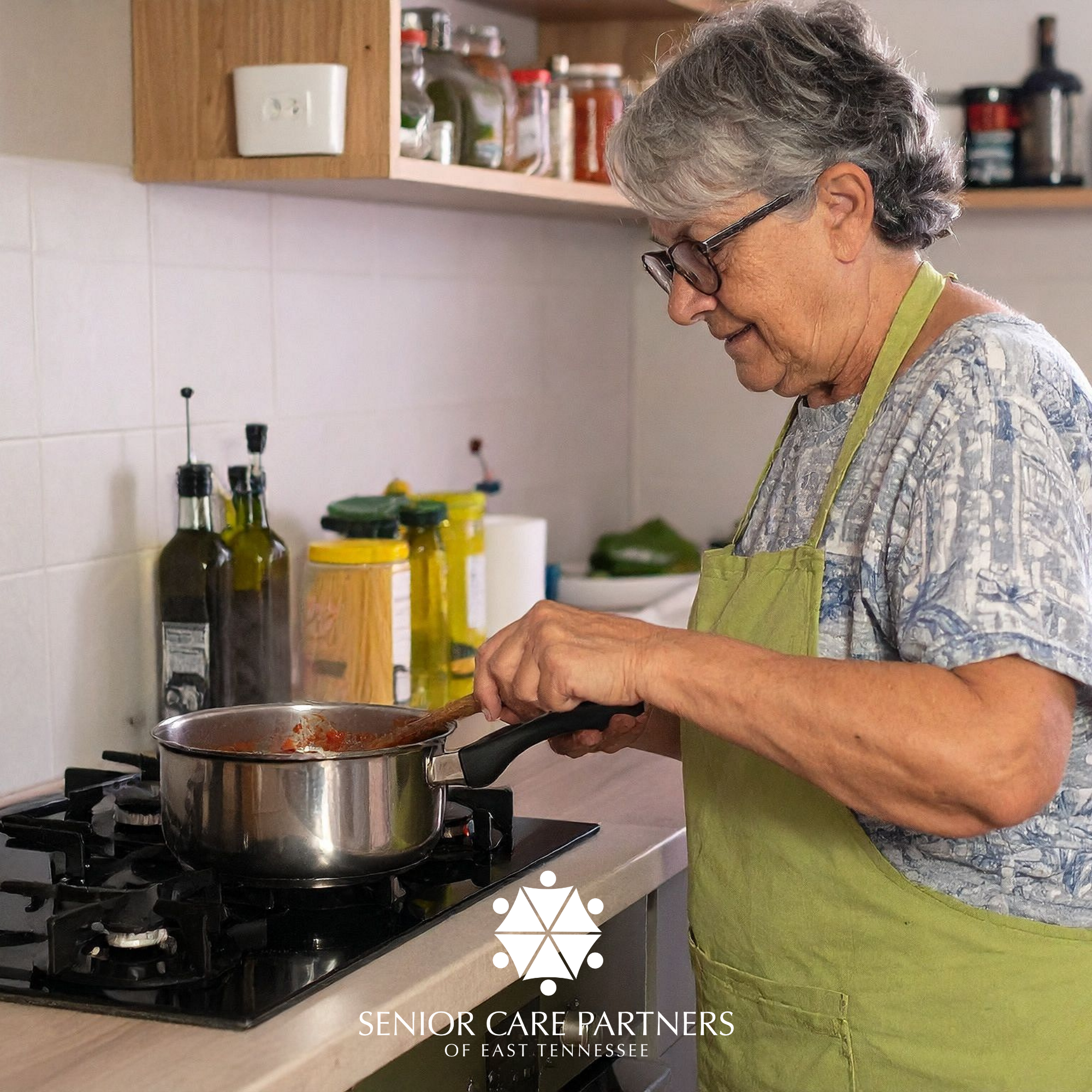
Cooking is something many people do their entire lives without much thought. However, as seniors age, preparing meals can slowly become more difficult, exhausting, or less appealing than it once was. Families often notice small changes first — skipped meals, expired groceries, or a loved one relying heavily on snacks instead of proper meals.
For caregivers and families in Maryville, TN, understanding why seniors stop wanting to cook can help prevent nutritional issues and support overall health and independence. At Senior Care Partners, we know these changes are often connected to much more than simply “not feeling hungry.”
Why Cooking Can Become Difficult with Age
There are many reasons seniors may lose interest in cooking. In most cases, it is not laziness or stubbornness. Often, it is a combination of physical, emotional, and lifestyle changes that build gradually over time.
Fatigue is one of the most common reasons. Tasks that once felt simple — standing in the kitchen, lifting cookware, or cleaning dishes — can become tiring.
Cooking for one can also affect motivation. After losing a spouse or living alone for many years, preparing a full meal may no longer feel worth the effort.
At the same time, appetite changes are common with aging. Certain medications, health conditions, or reduced activity levels may make seniors feel less hungry throughout the day.
Signs Families Should Pay Attention To
Small changes in eating habits can sometimes signal larger concerns.
Families may notice:
Weight loss
Expired food in the refrigerator
Less grocery shopping
Increased reliance on frozen meals or snacks
Low energy levels
Sometimes seniors avoid cooking because they feel physically unsafe in the kitchen. Balance issues, arthritis, memory concerns, or vision changes can all make meal preparation more difficult.
Watching for patterns rather than isolated moments is important.
The Impact of Poor Nutrition
Nutrition plays a major role in healthy aging. When seniors stop eating balanced meals regularly, it can affect:
Energy levels
Muscle strength
Immune function
Mood
Cognitive health
Poor nutrition may also increase fall risk and make recovery from illness more difficult.
At Senior Care Partners in Maryville, TN, we often remind families that eating habits can reveal important clues about overall wellness.
Easy Ways Families Can Help
The good news is that small adjustments can make a meaningful difference.
Simplify Meals
Meals do not need to be complicated to be nutritious. Seniors may feel more comfortable preparing:
Sandwiches
Soups
Fresh fruit
Pre-cut vegetables
Simple protein options
Keeping preparation easy reduces stress and fatigue.
Encourage Smaller Meals
Large meals may feel overwhelming. Instead, smaller meals and snacks throughout the day can feel more manageable and appealing.
Simple snack plates with cheese, fruit, crackers, yogurt, or tuna can provide important nutrients without requiring much effort.
Make Meals Social
Eating alone can reduce appetite and motivation. Family dinners, shared lunches, or even regular phone calls during mealtime can help seniors feel more connected and encouraged to eat consistently.
Check the Kitchen Setup
Simple adjustments can improve safety and comfort:
Move frequently used items within easy reach
Improve lighting
Reduce clutter
Use lightweight cookware
These changes can help seniors feel more confident preparing meals independently.
When to Seek Additional Support
If appetite loss or reduced eating becomes consistent, it may be time to involve a healthcare provider.
Families should pay attention if a loved one:
Loses noticeable weight
Appears weak or fatigued
Stops cooking completely
Shows confusion around meal preparation
Has difficulty managing medications alongside meals
Sometimes nutritional changes are connected to underlying health conditions, medication side effects, or cognitive concerns.
Supporting Healthy Aging in Maryville, TN
Changes in eating habits are often one of the earliest signs families notice when a senior begins needing more support. Addressing these changes early can help maintain health, safety, and independence longer.
At Senior Care Partners in Maryville, TN, we provide compassionate care that looks at the whole person — including lifestyle habits, nutrition, daily routines, and overall wellness.
Because healthy aging is about more than medical care. It is about helping seniors continue living well every day.